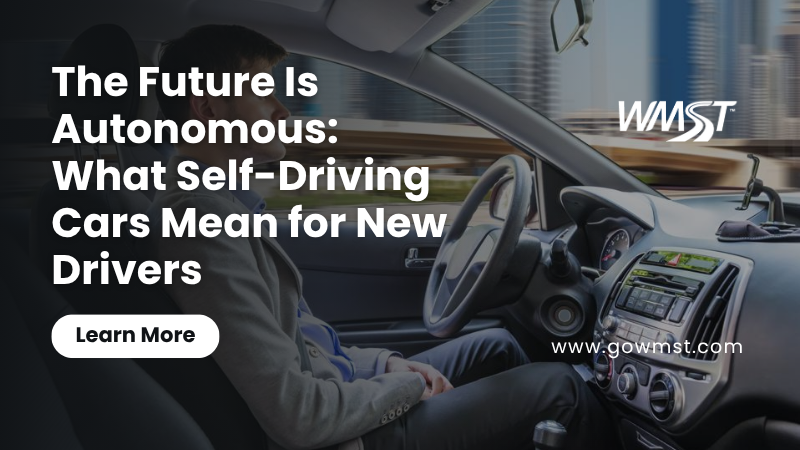
The Future Is Autonomous: What Self-Driving Cars Mean for New Drivers
The pace of car technology is incredible. As a new driver in 2026, you are learning in a vehicle that is likely equipped with “smart” features that didn’t exist a decade ago. We hear terms like adaptive cruise control, lane-keep assist, and “self-driving” all the time, and it’s easy to get confused.
But what do these systems mean for you as a learner? And how do they affect the one thing you’re focused on: passing your driving test?
This guide will clear up the confusion, explain the difference between the car “helping” and the car “driving,” and detail what is—and is not—allowed in your Washington driving test.
Understanding Driver-Assist vs. Fully Autonomous
First, it’s critical to understand the two very different technologies in autonomous driving awareness in WA. As vehicle technology continues to evolve, there will still be practical needs for traditional car transport solutions, and services like https://www.shiply.com/us/car-shipping/virginia-car-shipping/virginia-beach-car-shipping can help ensure safe and efficient vehicle relocation when driving is not an option.
- 1. Driver-Assist Systems (ADAS): This is what your 2026 car has. These are “Level 1” or “Level 2” systems designed to help a fully engaged driver. The driver is 100% in control and responsible.
- Examples: Backup cameras, adaptive cruise control, lane-keep assist, and blind-spot monitoring.
- 2. Fully Autonomous (Self-Driving): This is “Level 4” or “Level 5” technology, where the car does all the driving without human intervention.
- The 2026 WA Law: As of 2026, these vehicles are not legal for public use in Washington. They are only allowed for research by registered companies and must have a human safety operator present. You will not be taking your lessons or your test in a “self-driving” car.
Safety Implications for Learner Drivers
Driver-assist systems are fantastic safety tools, but they create a new risk for learners: complacency.
These systems can make a new driver over-reliant on the technology, failing to build the core, fundamental skills. A driver who only uses a backup camera may not learn how to judge space by looking over their shoulder. A driver who always uses lane-keep assist may not master the art of centering their car on their own.
The Washington DOL knows this, which is why the driving test is specifically designed to evaluate your skills, not your car’s.
How WMST Teaches Drivers to Manage Smart Vehicles?
At WMST, our philosophy is simple: technology assists a good driver, but it never replaces one. We teach you to be the smart driver in a smart car.
- We Train the Fundamentals: The WA driving test bans the use of automated parking and requires you to look over your shoulder when backing up. This is why our six full hours of real behind-the-wheel instruction (not simulations) are so critical. We train you to master parallel parking and backing maneuvers without the aids, just as you’ll be tested.
- We Build Your Confidence: Our WMST modern car lessons teach you to use these systems as the tools they are. You’ll learn to use your backup camera as a quick “check” (like a mirror) before you turn your head to do the real maneuver.
- We Insist on Full Control: We teach you to be in full command. This means knowing when to turn off assists like lane-keep assist during lessons to ensure you are the one mastering the skill of tracking and centering the car.
Preparing for the Cars of Tomorrow
The best way to prepare for the cars of 2026 and beyond is to become a master of the fundamentals. A driver who can park, back up, and change lanes perfectly without assists will be an even safer, more confident driver when they are using those assists. We train you for the test, but we prepare you for a lifetime of safe driving in any car you ever own.
Frequently Asked Questions (FAQs)
Do self-driving features affect how I’m tested?
Yes, 100%. The DOL’s rules are very specific. Automated or “self-parking” features are strictly banned. For the backing maneuver, the official WA DOL guide states, “You may not use a back-up camera during the simulated backing maneuver.” You must look over your shoulder. You can use the camera for a quick glance (like a mirror), but relying on it will cause you to fail.
Should I turn off driver assists during lessons?
Yes. We recommend turning off systems like adaptive cruise control and lane-keep assist during your test and much of your practice. The examiner is testing your ability to control your speed and lane position, not the car’s. If your lane-keep assist “beeps,” it signals to the examiner that you weren’t in control.
Are autonomous vehicles legal in WA?
No, not for public use. As of 2026, Washington only allows registered companies to test autonomous vehicles (Levels 3-5), and these vehicles must have a human safety operator inside. The cars you are learning in are not autonomous.
What systems do modern cars use for safety?
Most modern cars use Driver-Assist Systems (ADAS). The most common are Automatic Emergency Braking (AEB), Blind-Spot Monitoring, Rear Cross-Traffic Alert, Lane-Keep Assist, and Adaptive Cruise Control.
How is WMST adapting to the rise of smart cars?
WMST driver training is perfectly aligned with this new technology. We embrace it by teaching you what it’s for, but we insist on you mastering the fundamental skills first. Our six hours of real in-car training ensure you can pass the DOL test, which specifically bans or restricts these aids to prove you are a safe, competent driver on your own.
Keep an eye for more latest news & updates on Zero Devicenet!